Hi! I’m Anderson Men, a junior studying Mechanical Engineering at the University of Illinois Urbana-Champaign. On campus, I serve as the Steering System Lead for Illini Electric Motorsports and work as an Undergraduate Research Assistant at UIUC’s Renewable Energy & Turbulent Environment Group. My engineering focus centers on mechanical design, structural simulation, and hands-on manufacturing. Outside of engineering I really enjoy hiking, biking and watching F1!
UNIVERSITY OF ILLINOIS URBANA-CHAMPAIGN
/
EXPECTED GRADUATION MAY 2028
Projects
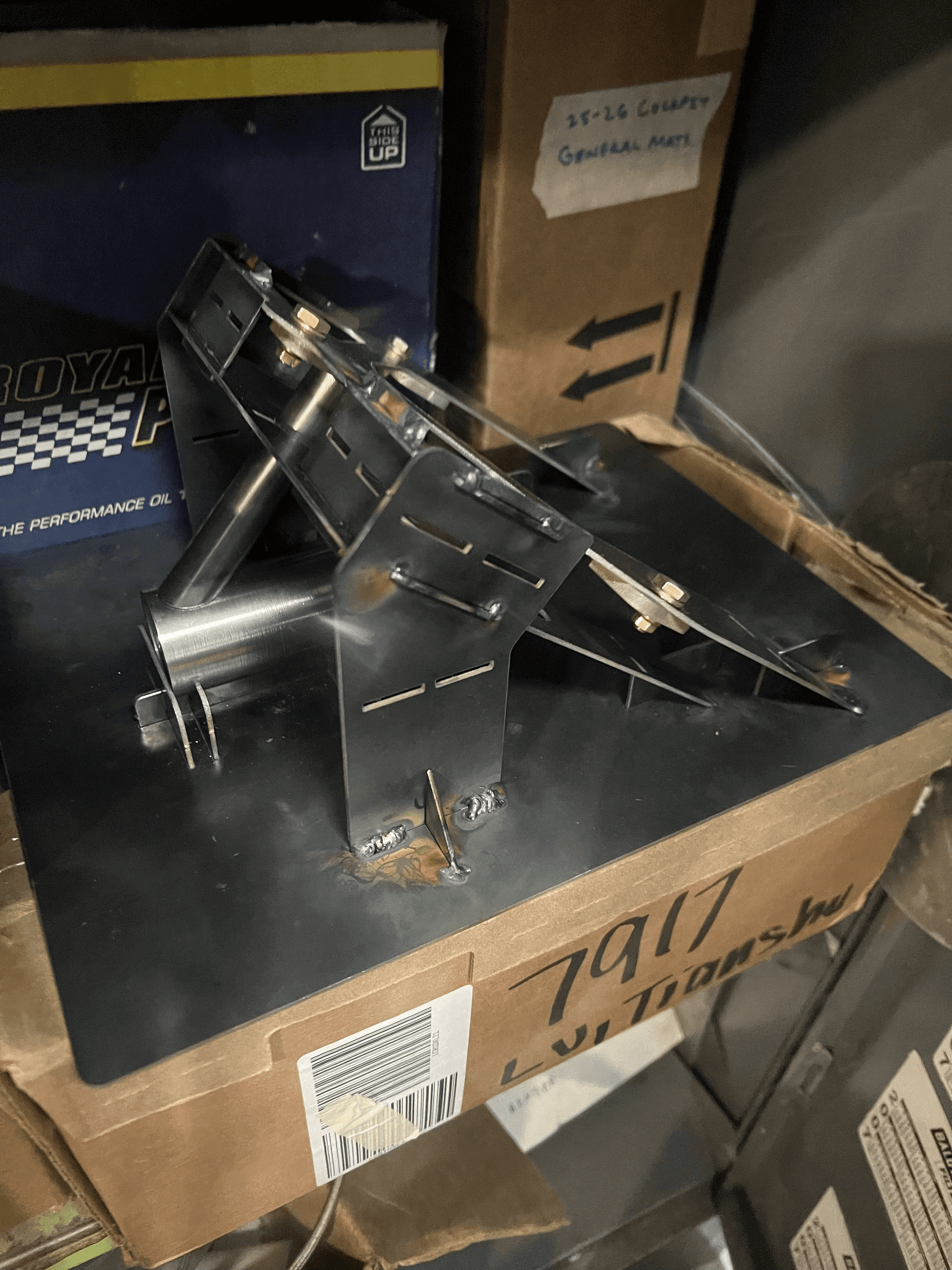
Upper Steering Column Support
Modeled, simulated, and fabricated an optimized upper steering column support in Illini Electric Motorsports. Utilized ANSYS structural FEA to eliminate stress concentrations and cut system mass by 20%. Managed the full production cycle by conducting a manufacturing trade study, precision-turning bearing housings on a lathe, and engineering custom welding fixtures.
CAD
Kinematics & Ergonomics: Modeled the support assembly from scratch in PTC Creo, strictly adhering to FSAE cockpit template clearance rules and driver steering wheel angle requirements. Packaging Constraints: Integrated mounting geometry around existing chassis tubes to maintain structural stiffness within a tight spatial envelope.

FEA
Boundary Conditions: Modeled chassis mounting planes as rigid surfaces and fasteners as deformable beam elements in Ansys to isolate structural behavior. Load Formulation: Derived peak driver steering wheel inputs and applied them directly to the support interface as realistic bearing loads. System Deflection & Rigidity: Simulated the complete upper column assembly with peak steering loads applied directly at the wheel center to quantify total system deflection and verify compliance targets. Geometric Optimization: Evaluated all critical driver load cases to eliminate stress concentrations, cutting mass by 20% while maintaining a minimum 1.6 Factor of Safety.


Manufacturing Trade Study
Process Evaluation: Conducted a formal trade study evaluating Manual Machining & Welding, 5-Axis CNC Milling, and DMLS (Metal 3D Printing) using a Pugh matrix. Selection Criteria: Scored options across lead time, cost, manufacturability, and structural performance. Outcome: Selected in-house 4130 steel manual machining and welding to minimize lead time and eliminate cost bottlenecks without sacrificing strength.
Fabrication
Precision Machining: Turned the upper bearing housing on a manual lathe to hold tight press-fit tolerances, pairing it with waterjet-cut mounting feet and manually cut arms. Fixture Design: Designed a custom welding fixture in CAD that featured tab-and-slot alignment for fast self-assembly, ensured thermal distortion control during welding, and allowed quick part removal post-weld.


Click to see details
Collagen 3D Printer
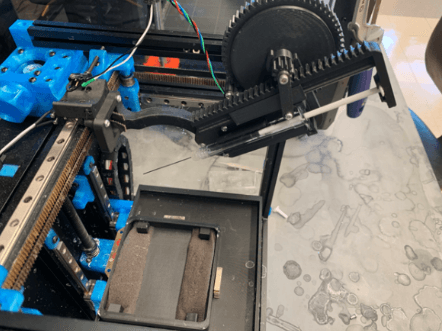
Automated the fabrication of biomedical collagen scaffolds by retrofitting a Voron 0.1 FDM 3D printer with a custom toolhead, precise linear actuator, and a magnetic heated-bed fixture. Engineered a custom wide nozzle in CAD and validated its fluid dynamics performance using CFD achieving a 30% faster flow rate and print time.
Toolhead
Direct Integration: Designed and 3D-printed a custom toolhead adapter that mounts directly to the original FDM carriage mounting points, eliminating the need for major printer frame modifications. Kinematic Flexibility: Integrated an adjustable-angle mounting joint to alter syringe toolhead positioning and optimize print orientation for varying collagen scaffold geometries.
Linear Actuator
Mechanism Design: Engineered a custom rack-and-pinion drive powered by the stock stepper motor to apply uniform linear pressure on the syringe plunger, delivering consistent volumetric extrusion. Quick-Swap Ergonomics: Incorporated custom snap-fit retention latches to allow rapid, toolless syringe removal and reloading between printing batches. Resolution Optimization (V2): Iterated to a geared-down Version 2 mechanism to increase mechanical advantage, significantly improving micro-stepping resolution and low-flow extrusion control.


Bed Fixture
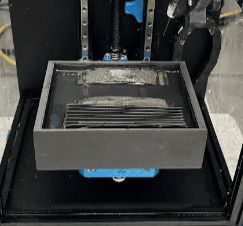
Thermal Control: Leveraged the stock 3D printer heated bed to heat and maintain constant temperature within the Phosphate-Buffered Saline (PBS) bath required for collagen gelation. Magnetic Coupling: Designed a quick-release magnetic fluid bath fixture featuring porous sponges along the edges to provide structural anchoring points during initial scaffold layer deposition.

Custom Nozzle
Flow Geometry: Designed a custom wide-aspect nozzle in CAD to reduce fluid shear stress and enable higher volumetric output of high-viscosity collagen. Simulation & Validation: Modeled internal nozzle fluid dynamics using CFD software, validating a 30% increase in volumetric flow rate that reduced print times by 30% and cut total manual fabrication time by 75% with a higher flow rate and wider collagen strips.


Click to see details
Coaxial Swerve Drivetrain
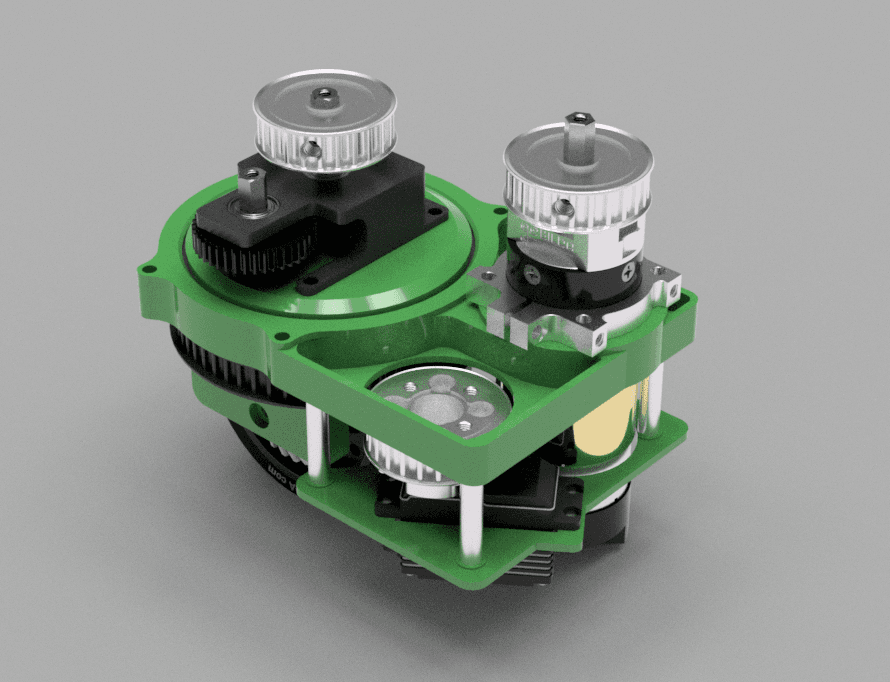
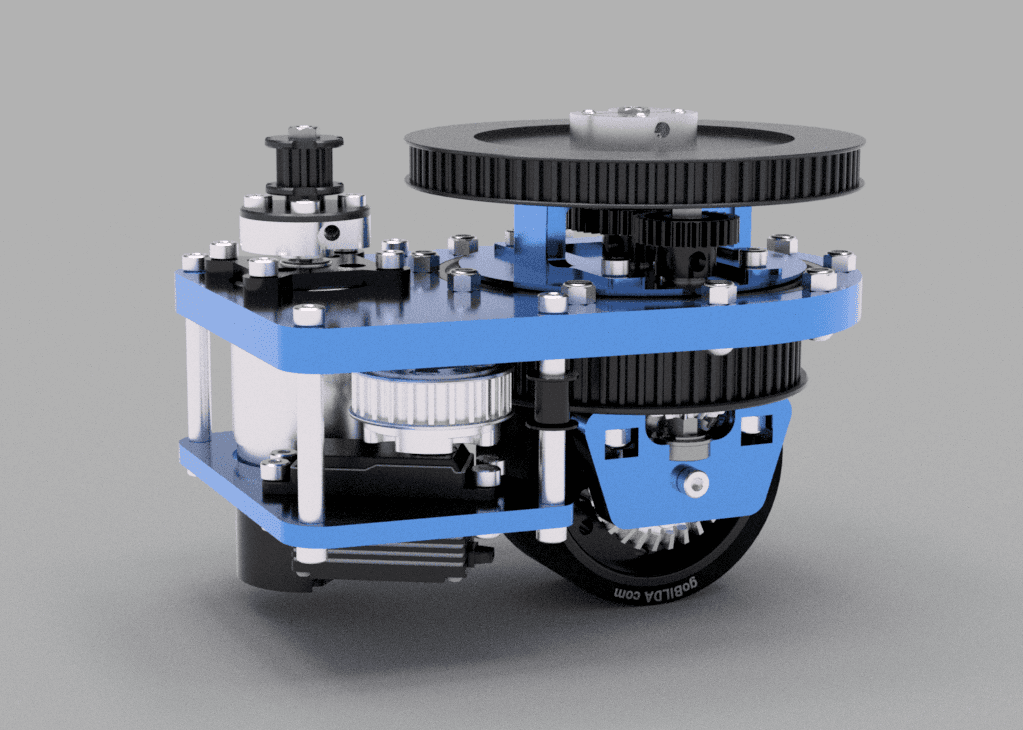
Designed and manufactured a custom coaxial swerve drivetrain for FTC robotics to achieve 360-degree maneuverability. Iterated through two complete design cycles, with the V2 architecture significantly reducing size, increasing structural robustness, and optimizing design for assembly ease.
V1
CAD Packaging: Modeled a custom 360-degree coaxial swerve module in CAD, organizing the wheel assembly, continuous drive motor, high-torque steering servo, and bevel gear reduction into a single self-contained unit.
Rapid Prototyping: Fabricated custom structural components via 3D printing and off-the-shelf hardware to validate gear meshing, assembly, and basic rotational control.

V2
Mass & Footprint Reduction: Scaled down component geometry to reduce module volume and weight, replacing threaded fasteners with interference press fits to save space and mass.
Rigidity Optimization: Strengthened housing wall geometry to increase structural stiffness under cornering loads while reducing play in the gearing.
Design for Assembly (DFA): Re-architected component stacking and fastener access to make assembly, teardown, and field maintenance significantly faster and easier.
Click to see details
First Tech Challenge Robot
Led full-system CAD and mechanical assembly for a competitive FTC robot across two major design iterations. Upgraded the V2 architecture with a 2-way horizontal extension and a differential arm, freeing up servo capacity for a hanging mechanism and allowing rapid scoring without requiring full robot rotation. Packaged all mechanisms onto a custom mecanum drivetrain, prioritizing maintaining strafing ability while minimizing the system weight and complexity of a traditional swerve drive.
V1
Mecanum Drivetrain: Engineered a custom mecanum wheel chassis enabling multi-directional strafing agility, delivering omnidirectional maneuverability without the mass and mechanical complexity of a full swerve drive.
Dual-Axis Lift System: Designed multi-stage vertical and horizontal linear extensions to maximize scoring reach while minimizing necessary chassis positioning movements.
3-Axis Manipulator (V1): Developed an initial 3-axis articulated arm for versatile game piece pickup and positioning.


V2
Compact Footprint (-25% Size): Scaled down total robot volume by 25%, significantly enhancing field navigation, cycle speed, and clearance when maneuvering around opposing robots.
Multi-Stage Extension: Integrated a secondary horizontal extension onto the main vertical lift, enabling accurate high-tier scoring from multiple angles without requiring drivetrain rotation increasing scoring efficiency by 35%.
Differential Arm: Converted two rotational arm axes into a differential drive mechanism, optimizing wrist motion while freeing up a dedicated servo channel to power a high-load chassis hanging assembly.


Click to see details
Turbulent Flow Observation Channel
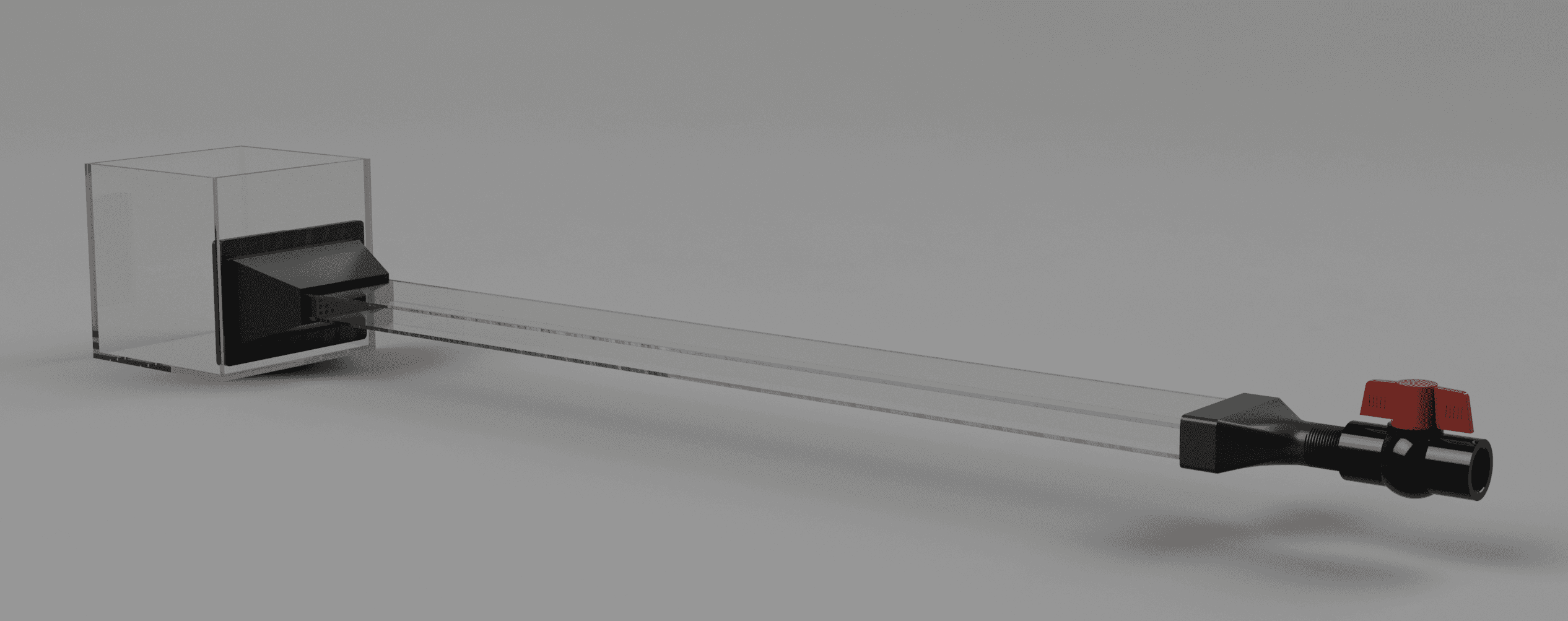
Engineered a clear acrylic fluid observation channel, sized to maintain a stable 1 cubic centimeter per second volumetric flow rate from a gravity-fed reservoir. Designed a custom 3D-printed flow smoother insert to eliminate initial channel turbulence, and modeled a custom endplug with integrated 1NPT threads for seamless flow-control valve integration.
Channel Geometry & Hydraulic Sizing
Flow Calculations: Sized the clear acrylic channel cross-section based on hydraulic head calculations to maintain a consistent 1 cubic centimeter per second volumetric flow rate while minimizing pressure drop variance during reservoir drainage.
Manufacturing Plan: Evaluated three fabrication approaches to balance internal channel wall smoothness, optical clarity for camera visualization, and overall assembly cost.

Adapter & Flow Smoother
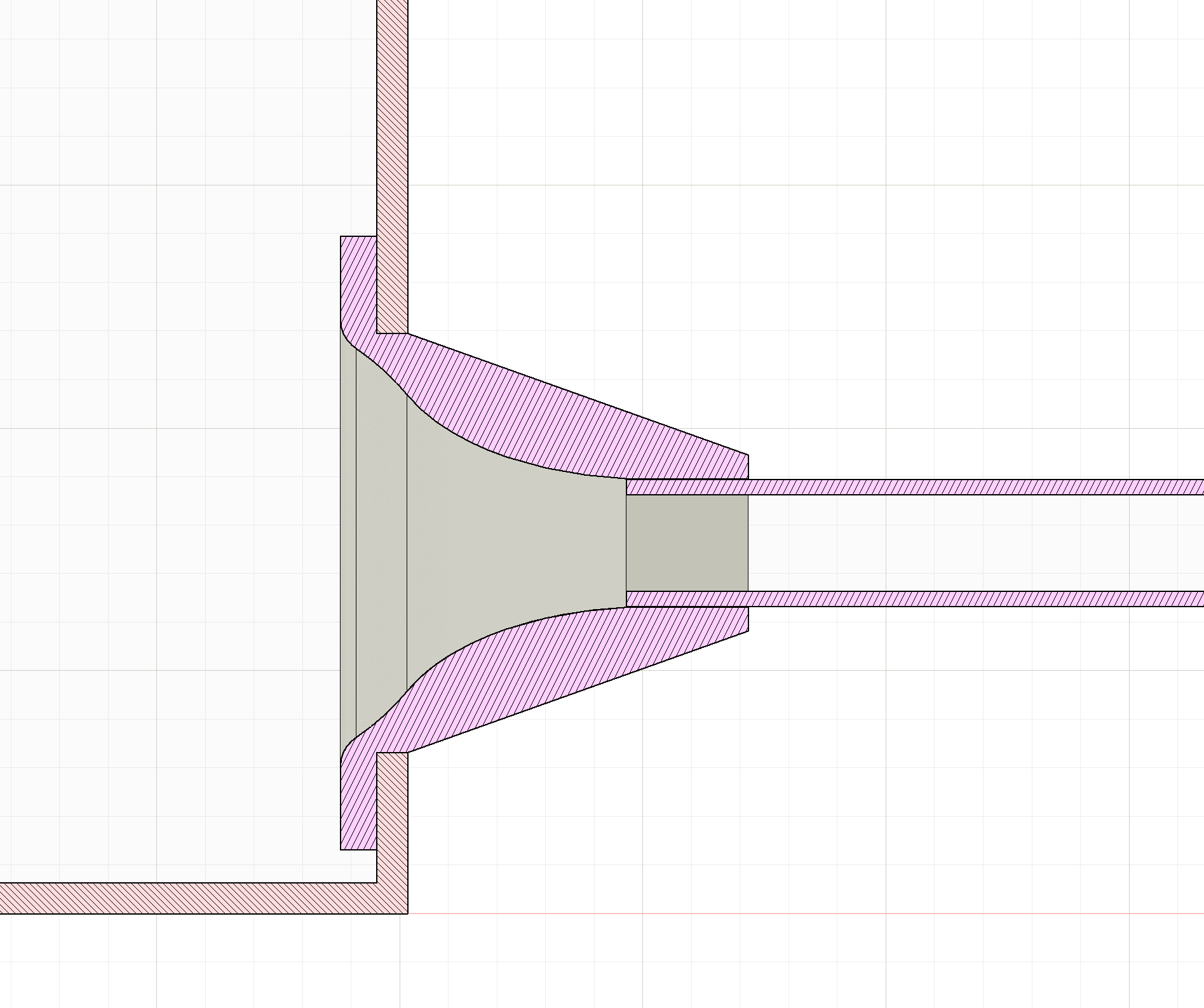
Turbulence Reduction: Designed and 3D-printed a custom intake adapter that seamlessly transitions fluid from the main supply tank into the observation channel.
Flow Conditioning: Integrated an internal flow-smoother insert at the channel inlet to eliminate entry eddies and ensure laminar, uniform flow profile entry.


Endplug
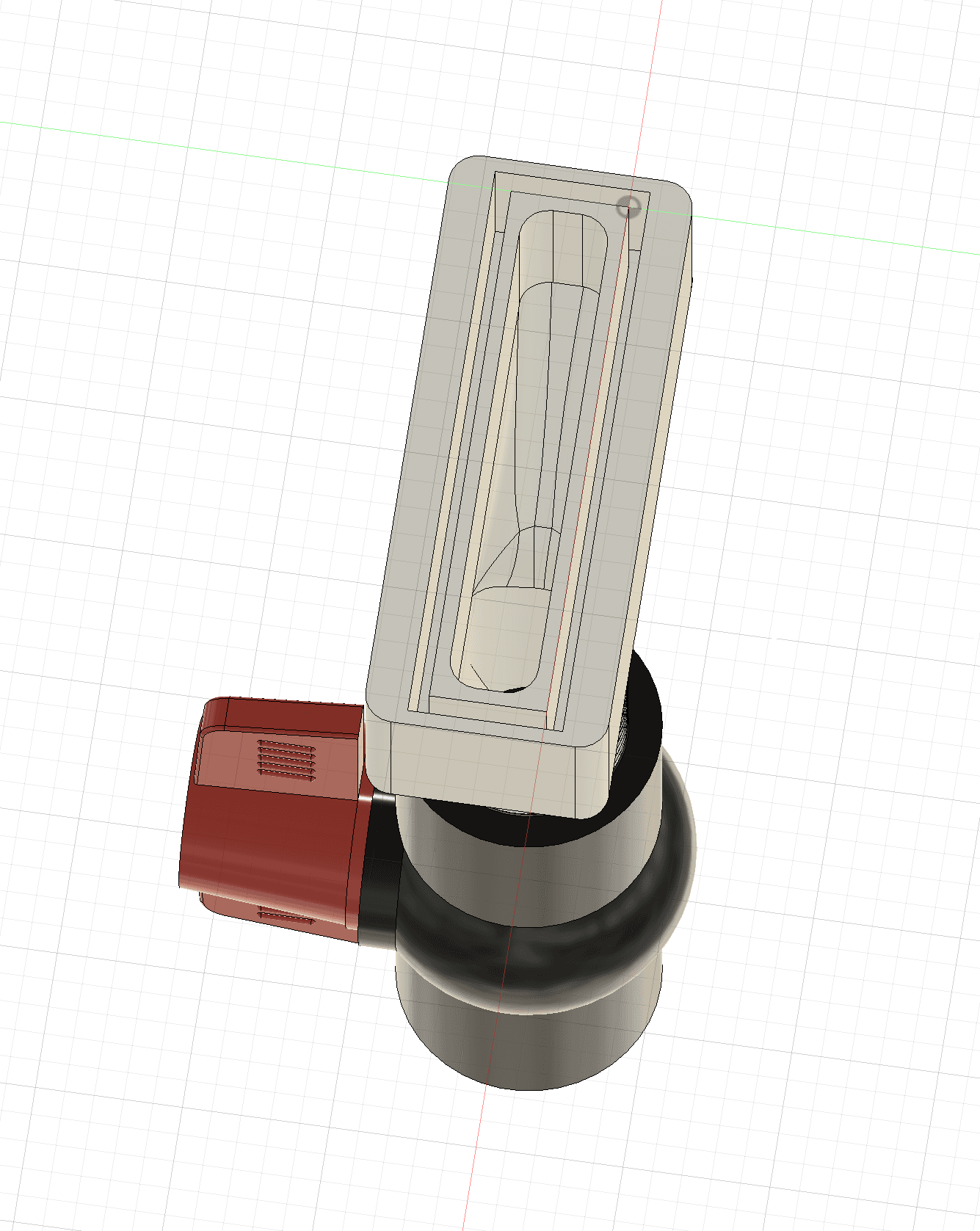
Sealing & Interface: Modeled a custom threaded endplug with integrated 1NPT pipe threads to ensure a leak-free connection to an external flow control valve.
Modular Disassembly: Designed the endplug geometry for easy removal during channel flushing, cleaning, and sensor calibration.


Click to see details